 VIVE O
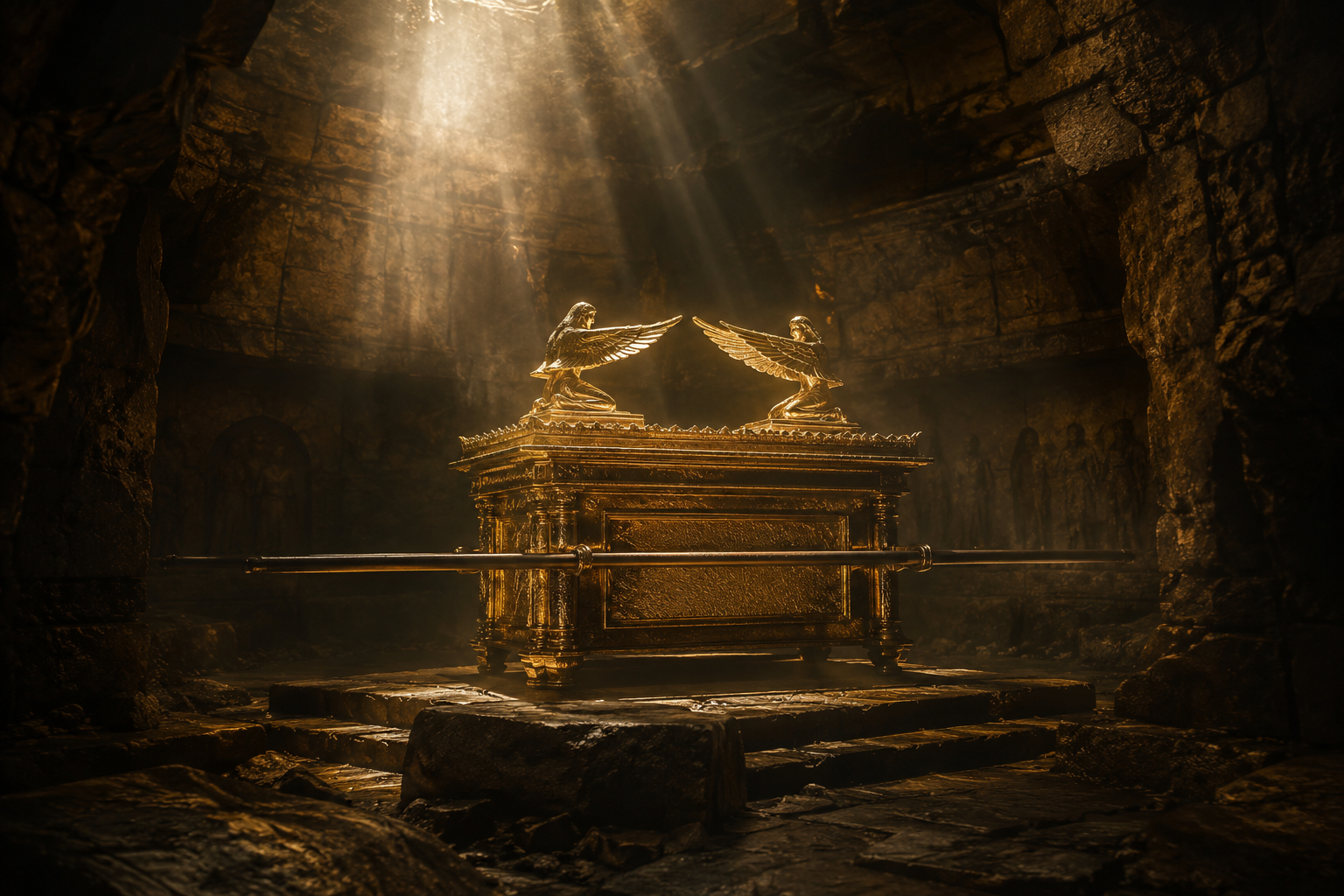
In 1981 the world met Indiana Jones chasing Nazis in search of the Ark of the Covenant across the Egyptian desert. What many do not know is that the real mystery behind this sacred object is even more intriguing than any film. The last reliable biblical record of the Ark dates to roughly 621 BC, during the reign of King Josiah. After that? Total silence.
For almost 2,600 years, archaeologists, theologians and treasure hunters have asked: where is the most sacred object of the Old Testament? The theories run from monasteries hidden in Ethiopia to secret tunnels beneath the Temple Mount. Some rest on historical evidence; others on fascinating legend.
In this article we will examine the main hypotheses about the Ark’s whereabouts, look at what the archaeological record reveals, and find out why this mystery still defies researchers around the world.
The last trace: when the Ark disappears from the record
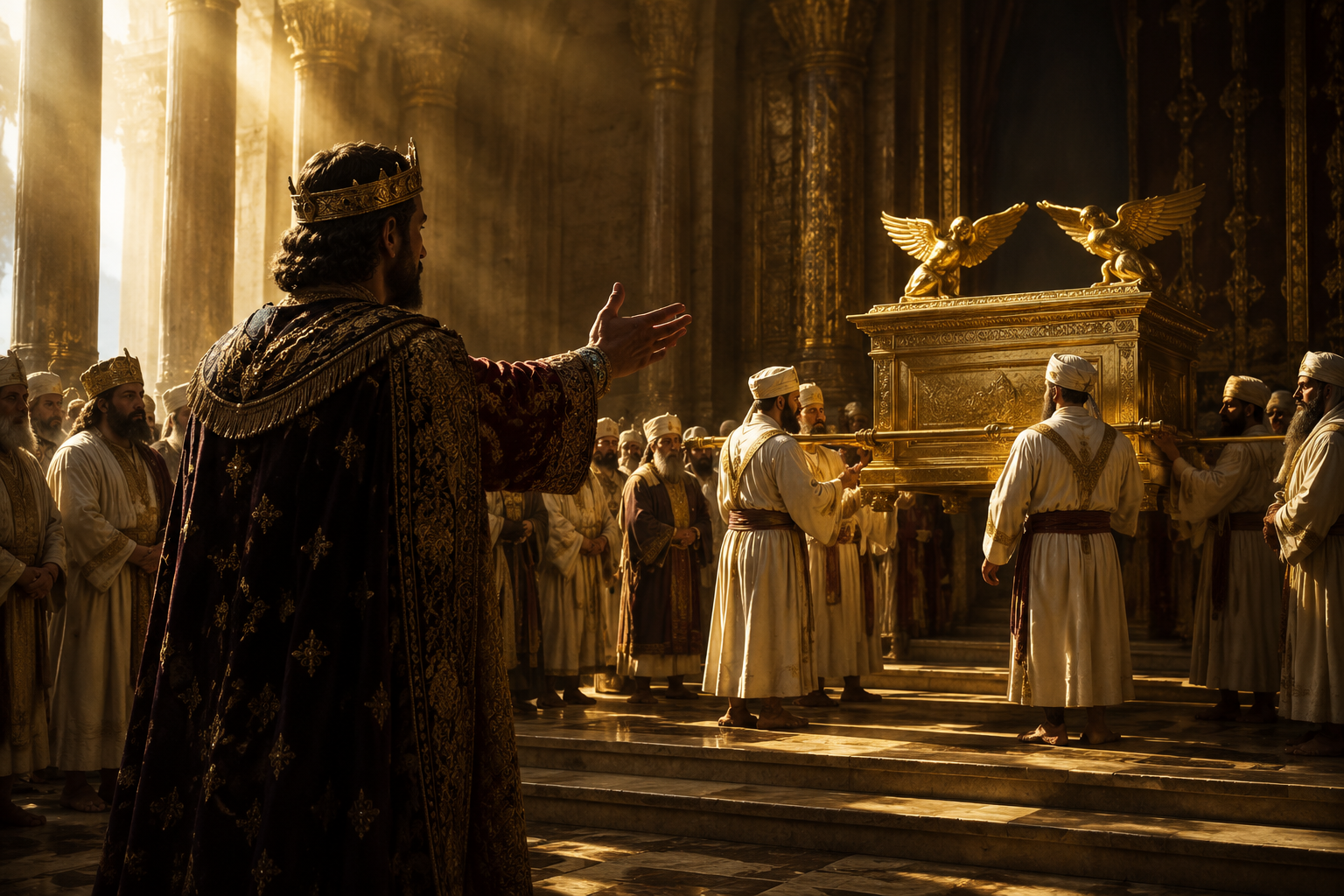
To understand the mystery we first need to establish when the Ark of the Covenant was last seen. The biblical records give us crucial clues, but they also raise troubling questions.
The book of 2 Chronicles mentions the Ark during the religious reforms of King Josiah, around 621 BC:
“He said to the Levites who taught all Israel, who were holy to Yahweh, ‘Put the holy ark in the house which Solomon the son of David king of Israel built. It will no longer be a burden on your shoulders. Now serve Yahweh your God, and his people Israel.'” (2 Chronicles 35:3)
This verse suggests something intriguing: why would Josiah need to order the Ark placed “in the house which Solomon built”? Where had it been before? Some scholars read this as evidence that the Ark had been removed from the Temple, possibly hidden during the ungodly reigns that preceded him.
But here is the problem: when Nebuchadnezzar destroyed Jerusalem in 586 BC, just 35 years later, the Ark is not mentioned among the plundered treasures. Why?
The Ethiopian theory: guardians of the Ark for a thousand years
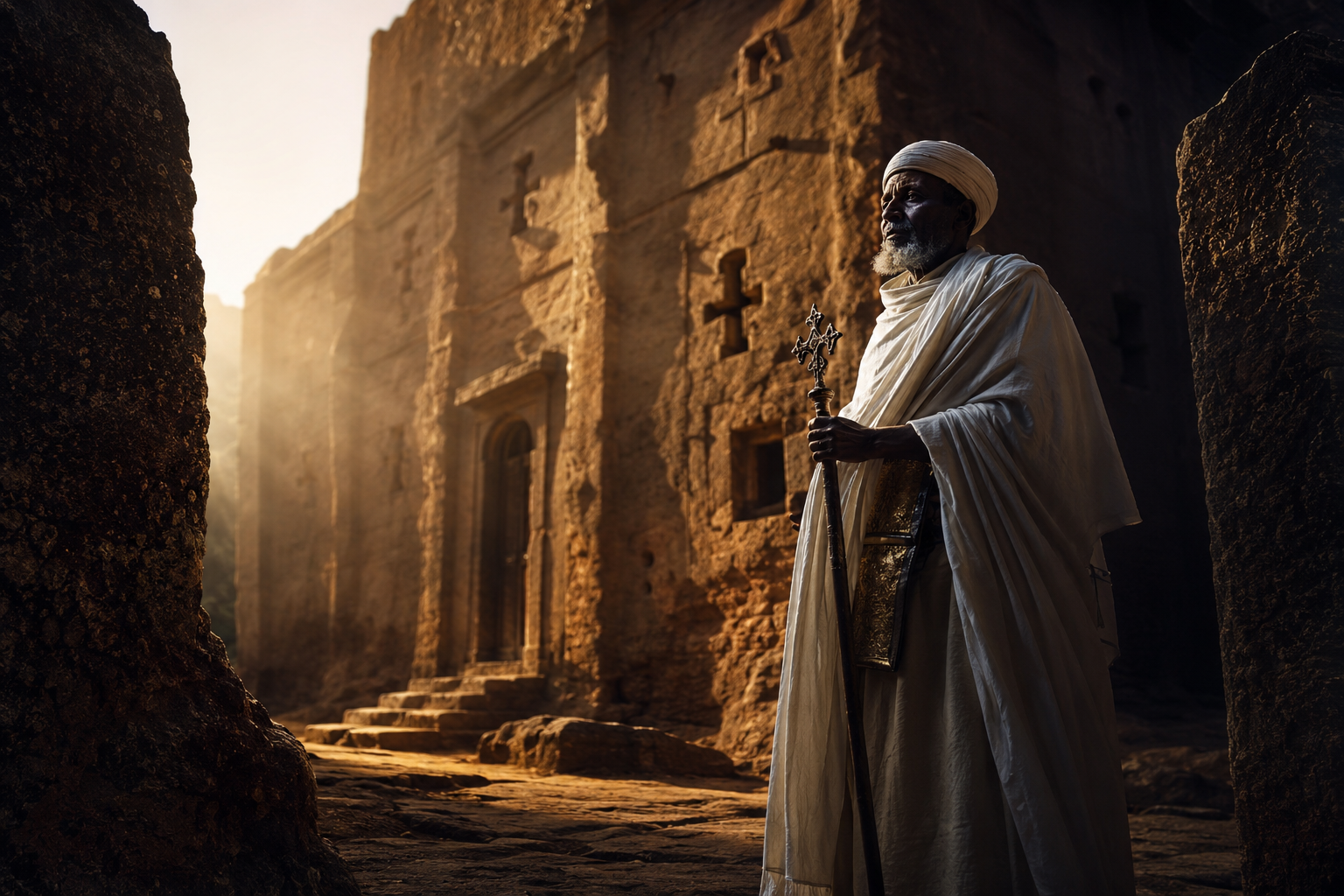
In the city of Axum, in Ethiopia, inside a modest chapel called the Church of Our Lady Mary of Zion, an Orthodox monk claims to be the guardian of the true Ark of the Covenant. This is not a recent claim — the Ethiopian tradition has held that version for over a thousand years.
According to the Kebra Nagast (Glory of the Kings), a fourteenth-century Ethiopian text, the Ark reached the country through Menelik I, said to be the son of the Queen of Sheba and King Solomon. The narrative claims Menelik “borrowed” the Ark during a visit to Jerusalem and took it to Ethiopia.
What makes this theory particularly interesting is the archaeological context. Ethiopia holds one of the oldest Christian traditions in the world, with evidence of Jewish-Christian practices going back to the first centuries of the Christian era. The Ethiopian Jewish community (the Beta Israel) also preserved traditions that echo Temple practice in Jerusalem.
There is, however, a significant obstacle: nobody except the appointed guardian may see the supposed Ark. Not even the Patriarch of the Ethiopian Orthodox Church has access. How do you verify a claim that cannot be investigated?
The Josiah hypothesis: hidden before the destruction
One of the theories most respected among biblical scholars suggests that King Josiah himself, foreseeing the imminent destruction of Jerusalem, ordered the Ark hidden somewhere secret.
This hypothesis gains strength when we consider the historical context. Josiah ruled during a turbulent period, with the Assyrian empire in decline and Babylon emerging as the new power. A devout and politically shrewd king like Josiah would surely have read the signs of the times.
The Babylonian Talmud (Yoma 52b) records a tradition supporting this theory:
“When Solomon built the Temple, he foresaw that it would be destroyed and prepared a place to hide the Ark in the depths and winding passages beneath the Temple.”
Some researchers point to the apocryphal book of 2 Maccabees, which mentions the prophet Jeremiah hiding the Ark in a cave on Mount Nebo. Although that text is not considered canonical by most Christian traditions, it reflects ancient Jewish traditions about the fate of the Ark.
But if the Ark really was hidden in Jerusalem, why was it not recovered after the return from the Babylonian exile?
The post-exile silence
When the Jews returned from exile and rebuilt the Temple under Zerubbabel, the Ark was not restored to the Holy of Holies. The Talmud records that the Second Temple lacked five elements present in the First Temple, including the Ark of the Covenant.
That silence is deafening. If the location of the Ark had been known to the religious leaders, it would certainly have been recovered for the new Temple. The fact that it was not suggests the knowledge of its location was lost during the seventy years of exile.
Modern theories: beneath the Temple Mount
Since 1967, when Israel took control of the Temple Mount, several archaeological expeditions have investigated the possibility that the Ark is still hidden in underground chambers beneath the site of the ancient Temple.
Rabbi Yehuda Getz, the late Chief Rabbi of the Western Wall, claimed to have discovered a tunnel leading to a sealed chamber beneath the Temple Mount during excavations in the 1980s. According to reports, when his team tried to break the seal they were stopped by Muslim authorities, and the entrance was permanently sealed.
The physicist Vendyl Jones, who partly inspired the character of Indiana Jones, spent decades searching for the Ark in caves near Qumran, where the Dead Sea Scrolls were found. Although he uncovered interesting artefacts, including ancient anointing oil, the Ark remained elusive.
Political and religious constraints make any extensive excavation on the Temple Mount practically impossible, leaving this theory in the category of intriguing but unverifiable possibilities.
The darkest possibility: complete destruction
There is a theory many prefer not to consider: the Ark of the Covenant may simply have been destroyed during one of Jerusalem’s many invasions.
The historical record shows Jerusalem was sacked multiple times before the final destruction by Nebuchadnezzar. Pharaoh Shishak invaded the city during the reign of Rehoboam, son of Solomon, carrying off treasures from the Temple. Although the Bible does not specifically mention the Ark being taken, it may have been damaged or destroyed in that or later invasions.
Alternatively, the Ark may have been destroyed by the Babylonians themselves in 586 BC, with the precious materials (gold and wood) melted down or burned, erasing any evidence of its existence.
This theory, less romantic than the others, may explain why no convincing archaeological evidence of the Ark has been found in almost three millennia of searching.
What do modern archaeologists say?
The mainstream archaeological community keeps a healthy scepticism about extraordinary claims relating to the Ark of the Covenant. Dr Israel Finkelstein, director of the Institute of Archaeology at Tel Aviv University and one of the world’s leading authorities on biblical archaeology, notes that “despite decades of systematic excavation in Jerusalem and the region, we have no direct archaeological evidence confirming the Ark’s present location or even its physical existence”.
Dr William Dever, a renowned biblical archaeologist, adds that “absence of evidence is not evidence of absence, but after decades of meticulous excavation in Jerusalem and its surroundings, we have no independent archaeological evidence of the Ark”.
Finkelstein, author of dozens of books on biblical archaeology and responsible for major discoveries at sites such as Megiddo, stresses that “any claim about the Ark’s whereabouts must be held to the same scientific rigour applied to other archaeological discoveries. So far, none of the popular theories meets those criteria”.
Other researchers, such as Dr Eilat Mazar, who excavated extensively in the City of David, take a more optimistic view, suggesting future discoveries may yet reveal clues about the Ark’s fate.
The current scientific consensus is that, while the historical existence of the Ark is plausible given the cultural context of ancient Israel, its present location remains an unsolved mystery.
Beyond the mystery: the spiritual meaning of the search
Wherever the physical Ark may be, the search for it reveals something deep about human nature: our need to connect the tangible with the transcendent. The Ark represented God’s presence in a physical, visible way for ancient Israel.
The prophet Jeremiah offers an intriguing perspective on the Ark’s future:
“It will come to pass, when you are multiplied and increased in the land, in those days,” says Yahweh, “they will no longer say, ‘the ark of Yahweh’s covenant!’ It will not come to mind. They won’t remember it. They won’t miss it, nor will another be made.” (Jeremiah 3:16)
This verse suggests a time would come when the Ark itself would become unnecessary — a prophecy many Christians see fulfilled in the new covenant established by Christ.
Conclusion: the mystery that remains
After examining the available evidence, we are driven to a humble conclusion: the whereabouts of the Ark of the Covenant remains one of history’s great unsolved mysteries. The Ethiopian theories offer fascinating traditions but lack independent verification. The possibility that it lies hidden beneath Jerusalem is intriguing, but archaeologically inaccessible. And the destruction hypothesis, though bleak, cannot be ruled out.
Perhaps the real value of this mystery lies not in its solution, but in the journey of discovery it provides. Every theory takes us deeper into biblical history, into the archaeology of the ancient Near East, and into understanding how God related to his people.
The mystery of the Ark reminds us that some questions go beyond our present ability to answer, inviting us to humility before the great mysteries of faith and history.
The Great Story — 7 free devotionals
If this subject touched you, I put together a free devotional with the most important passages to deepen your Bible reading.