 VIVE O
Imagine finding an ancient book that records direct conversations with angels, reveals secrets about the giants mentioned in Genesis, and describes detailed visions of heaven and hell. That book exists — it is the Book of Enoch, a work that had a massive influence on Second Temple Judaism and early Christianity.
What makes it even more intriguing is discovering that Jesus and the apostles knew this text. Jude directly quotes a prophecy of Enoch in his letter. Peter seems to echo its narratives about fallen angels. And yet, when we open our Bibles today, there is no trace of it.
How did a book so influential, quoted by the biblical authors themselves, end up excluded from the sacred canon? The answer takes us on a fascinating journey through councils, theological debates and archaeological discoveries that reveal far more than a simple editorial decision.
The lost book that shaped generations

The Book of Enoch is not just any ancient text. Historical records show that this work circulated widely among Jews between 300 BC and AD 100 — a period crucial for understanding the context of the New Testament.
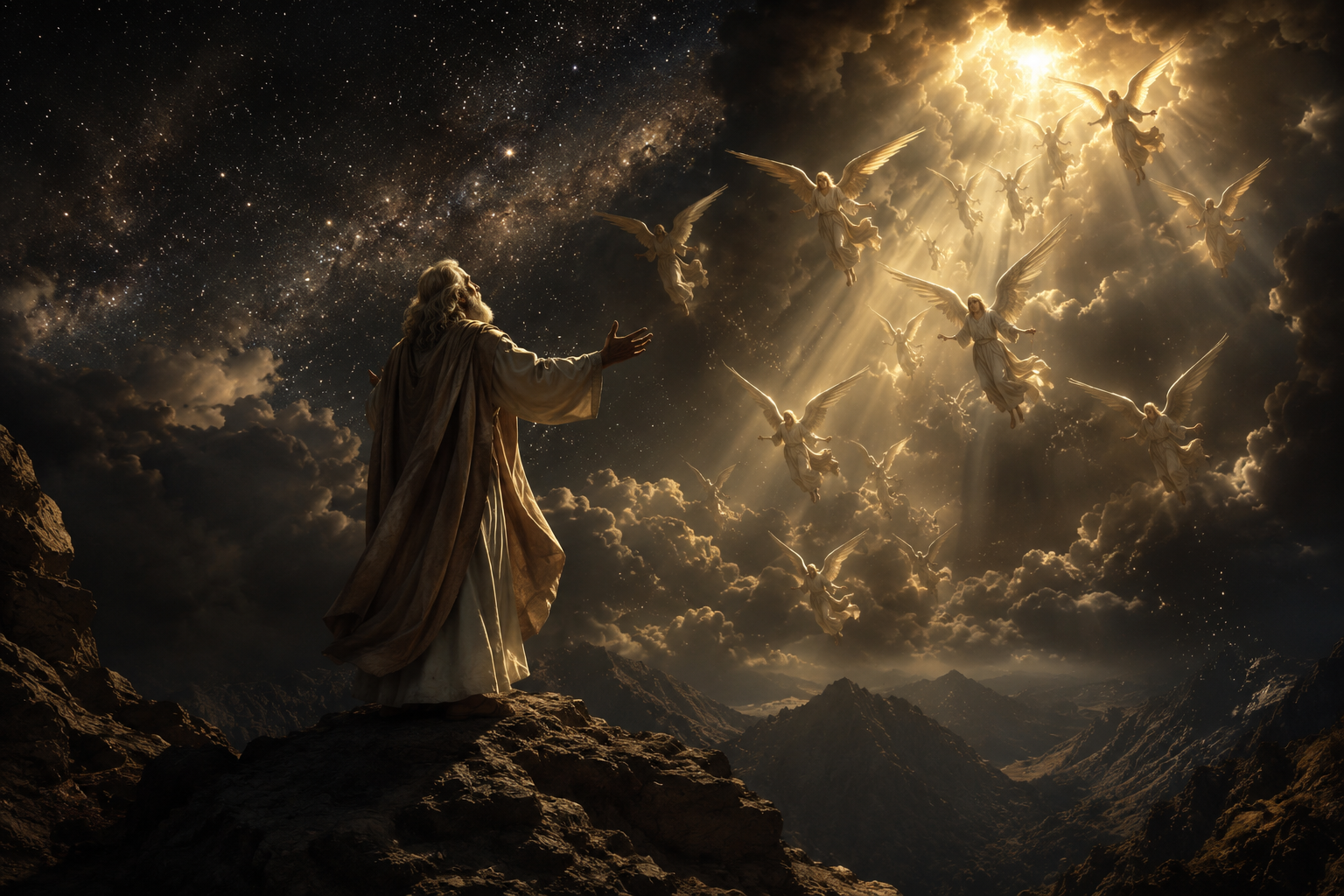
The work is traditionally attributed to Enoch, the man who walked with God mentioned in Genesis. The biblical text states that he did not experience death, but was taken directly by God:
Enoch walked with God, and he was not found, for God took him. (Genesis 5:24)
The pseudepigraphal book dramatically expands this narrative, presenting Enoch as a heavenly scribe who received extraordinary revelations about the spiritual world, the future of humanity and cosmic mysteries.
According to the renowned specialist in intertestamental Jewish literature George W. E. Nickelsburg, of the University of Iowa, the Book of Enoch represents one of the most sophisticated theodicies of the Second Temple period, offering elaborate answers about the origin of evil in the world through its narrative of the fallen angels.
But here the first investigative question arises: if this book was so respected, why did it start to stir controversy?
The controversial revelations
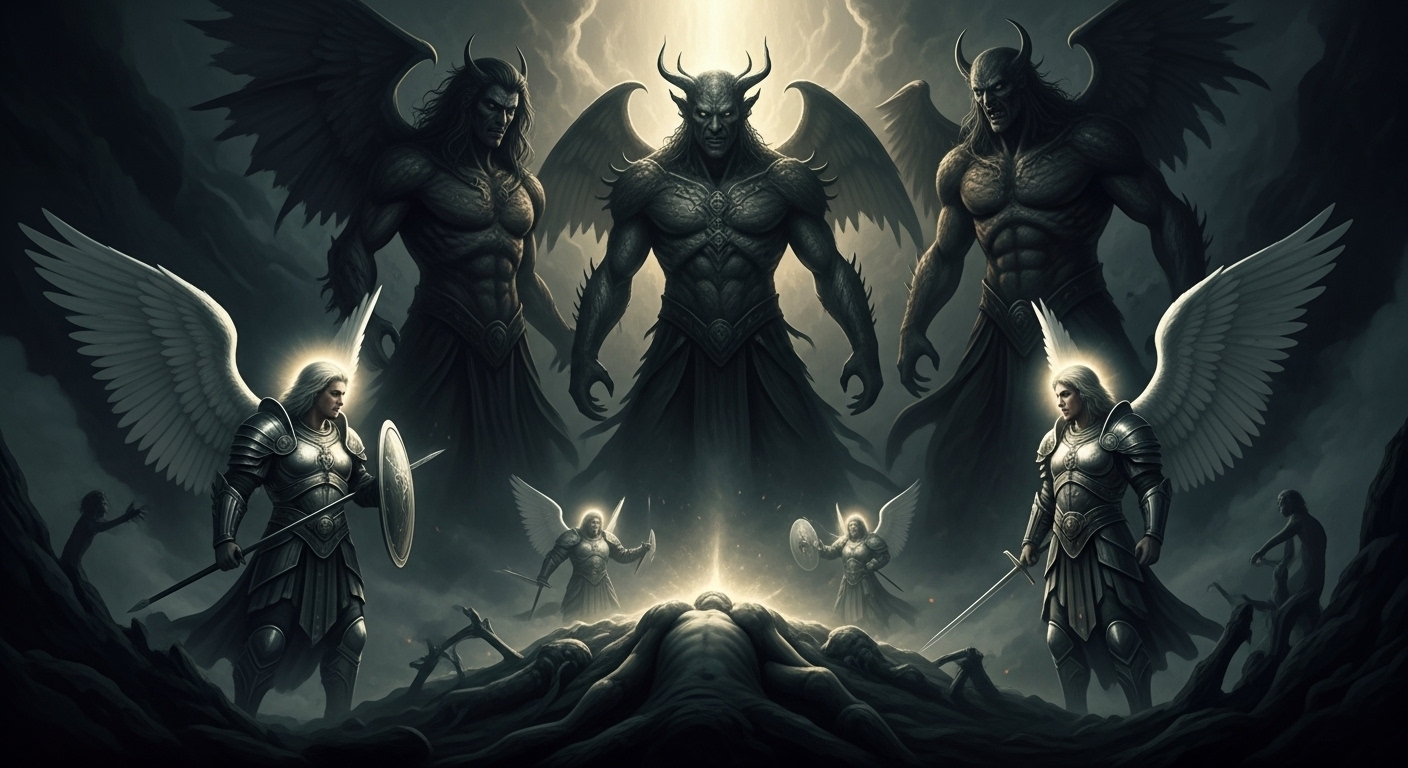
The Book of Enoch contains narratives that significantly expand the biblical account of the sons of God in Genesis 6. According to the text, two hundred angels called Watchers descended on Mount Hermon, made a pact and rebelled against God.
These angels not only joined with human women, fathering the giants (Nephilim), but also taught humanity forbidden knowledge: weapon-making, cosmetics, astrology and sorcery.
The narrative is detailed, naming specific angelic leaders and describing their destructive specialities. Unlike the concise account in Genesis, Enoch offers a complete cosmology of the origin of evil in the world.
That wealth of detail raises a crucial question: was it authentic divine revelation, or creative human elaboration?
The evidence of influence on the New Testament
Biblical researchers have identified multiple connections between the Book of Enoch and the New Testament that no serious investigation can ignore.
The clearest evidence is in the letter of Jude, which quotes word for word a prophecy attributed to Enoch:
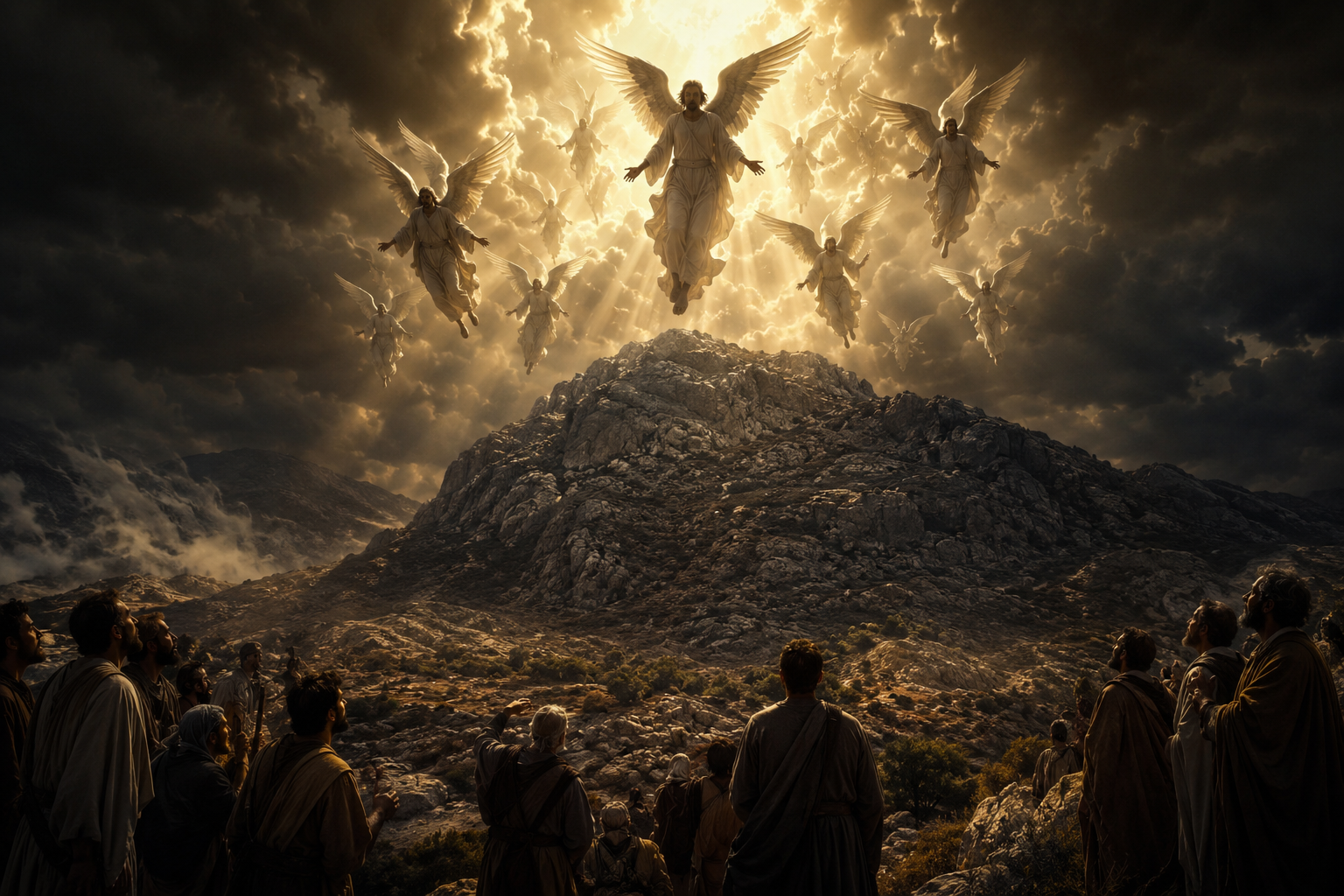
About these also Enoch, the seventh from Adam, prophesied, saying, “Behold, the Lord came with ten thousands of his holy ones, to execute judgment on all, and to convict all the ungodly of all their works of ungodliness which they have done in an ungodly way, and of all the hard things which ungodly sinners have spoken against him.” (Jude 14-15)
That quotation corresponds almost word for word to a passage in the Book of Enoch. Jude not only knew the text; he considered it prophetic and authoritative enough to include in his inspired letter.
Peter also seems to echo Enochic themes when he writes about angels who sinned being cast into Tartarus (the abyss), a concept rare in Jewish thought but central to Enoch.
Jesus and the Enochic traditions
Scholars note that several expressions characteristic of Jesus find parallels in Enoch. The title Son of Man, used often by Christ, appears extensively in the book as a designation of the Messiah.
The descriptions of final judgement, resurrection and the messianic kingdom in Enoch show striking similarities with the teachings of Jesus, suggesting both drew on the same Second Temple Jewish tradition.
If the influence was so evident, why then did the early Christians begin to question its canonicity?
The making of the canon
The exclusion of the Book of Enoch did not happen overnight. It was a gradual process that involved specific criteria developed by the early church to determine which books were truly inspired by God.
Scholars identify at least four main criteria that were applied: apostolicity (a link to the apostles), orthodoxy (agreement with established Christian faith), catholicity (universal acceptance by the churches) and inspiration (evidence of divine origin).
The question of authorship
The first problem Enoch faced was pseudepigraphy — being attributed to an ancient figure while clearly written centuries later. Although other biblical books also raise questions of authorship, the scholarly consensus that Enoch is a compilation of texts from different periods (300-100 BC) was more evident.
The Church Fathers gradually recognised that, although Jude quoted the book, that did not necessarily validate the whole work as inspired Scripture. Paul, for instance, quoted pagan poets without endorsing their entire philosophy.
The church historian Eusebius of Caesarea, in the fourth century, classified Enoch among the “disputed” books in his Ecclesiastical History, noting that although some Christians valued it, there was no universal consensus about its divine inspiration.
Emerging theological problems
As Christian theology developed, certain emphases in Enoch began to sound problematic. The work gave fallen angels a large role in explaining the origin of evil, potentially diminishing concepts such as human free will and divine sovereignty.
In addition, some sections contained detailed cosmological speculation with no support in other accepted Scriptures, creating doctrinal tension.
But was it only a theological matter, or were political and cultural factors also at play?
The historical context of the exclusion
To fully understand why Enoch was rejected, we have to look at the wider context of the formation of the Christian canon in the first centuries.
During the second and third centuries, the church faced multiple heresies that frequently quoted apocalyptic and pseudepigraphal texts to support their doctrines. Gnosticism in particular made extensive use of esoteric literature promising secret knowledge about the spiritual world.
The church’s response
Church Fathers such as Jerome and Augustine began to express growing caution about texts that, though ancient and respected, lacked the clear authority of the widely accepted Scriptures.
Jerome, responsible for the Latin Vulgate translation, noted that although some read Enoch, it was not universally accepted in the church as canonical Scripture.
The discovery of the Dead Sea Scrolls in 1947 revealed that the Qumran community, a Jewish sect, preserved multiple copies of Enoch, reinforcing its importance in Second Temple Judaism. However, that also confirmed its association with sectarian groups rather than mainstream Judaism.
Preservation in Ethiopia
Curiously, while Enoch disappeared from Western Christian traditions, it found refuge in the Ethiopian Orthodox Church, which keeps it as a canonical book to this day.
That preservation was crucial for modern scholarship: when European scholars rediscovered the complete text through Ethiopic manuscripts in the eighteenth century, they could finally assess the New Testament quotations in their original context.
The question that remains is: was the exclusion of Enoch the right call, or did the church lose valuable insight into the spiritual world?
The verdict of modern scholarship
Contemporary academic research offers a balanced perspective on Enoch’s exclusion from the biblical canon.
Specialists in intertestamental Jewish literature recognise the immense historical and theological value of the book for understanding the development of religious thought between the Old and New Testaments.
James Charlesworth, editor of the Old Testament Pseudepigrapha collection, argues that Enoch is indispensable for understanding the intellectual context in which Jesus and the apostles ministered.
The canonical criteria hold up
At the same time, most Christian scholars acknowledge that the criteria applied by the Church Fathers were legitimate. The evident pseudepigraphy, the elaborate speculation on themes other Scriptures treat more soberly, and the lack of universal acceptance were valid concerns.
The fact that Jude quotes Enoch does not set a precedent for canonising all literature the biblical authors knew. Paul quoted the poet Aratus, but that did not make Greek poetry inspired.
The exclusion of Enoch seems to reflect not a desire to suppress knowledge, but a legitimate pastoral concern to preserve doctrinal purity and avoid speculation that could pull believers away from the central truths of the faith.
Lessons for readers today
The story of the Book of Enoch offers valuable insight for Christians today facing similar questions about textual authority and spiritual discernment.
First, it shows that the formation of the canon was careful and principled, not arbitrary. The leaders of the early church took centuries to settle which texts truly carried divine authority.
Second, it illustrates that historical knowledge and spiritual value are not the same thing. Enoch remains a fascinating source for understanding Second Temple Judaism, but that does not automatically qualify it as inspired Scripture.
Third, it reveals the importance of communal discernment. The rejection of Enoch was not the decision of isolated individuals, but the result of decades of collective reflection by the universal church.
Finally, the preservation of Enoch in the Ethiopian tradition reminds us that different Christian communities can reach different conclusions about borderline texts, and that such diversity does not necessarily compromise the shared faith in the central gospel.
The Book of Enoch stands as a silent witness to an era when the boundaries between revelation and speculation were still being drawn, offering us a unique window into both the richness and the challenges of how the biblical tradition developed.
The Great Story — 7 free devotionals
If this subject touched you, I put together a free devotional with the most important passages to deepen your Bible reading.