 VIVE O
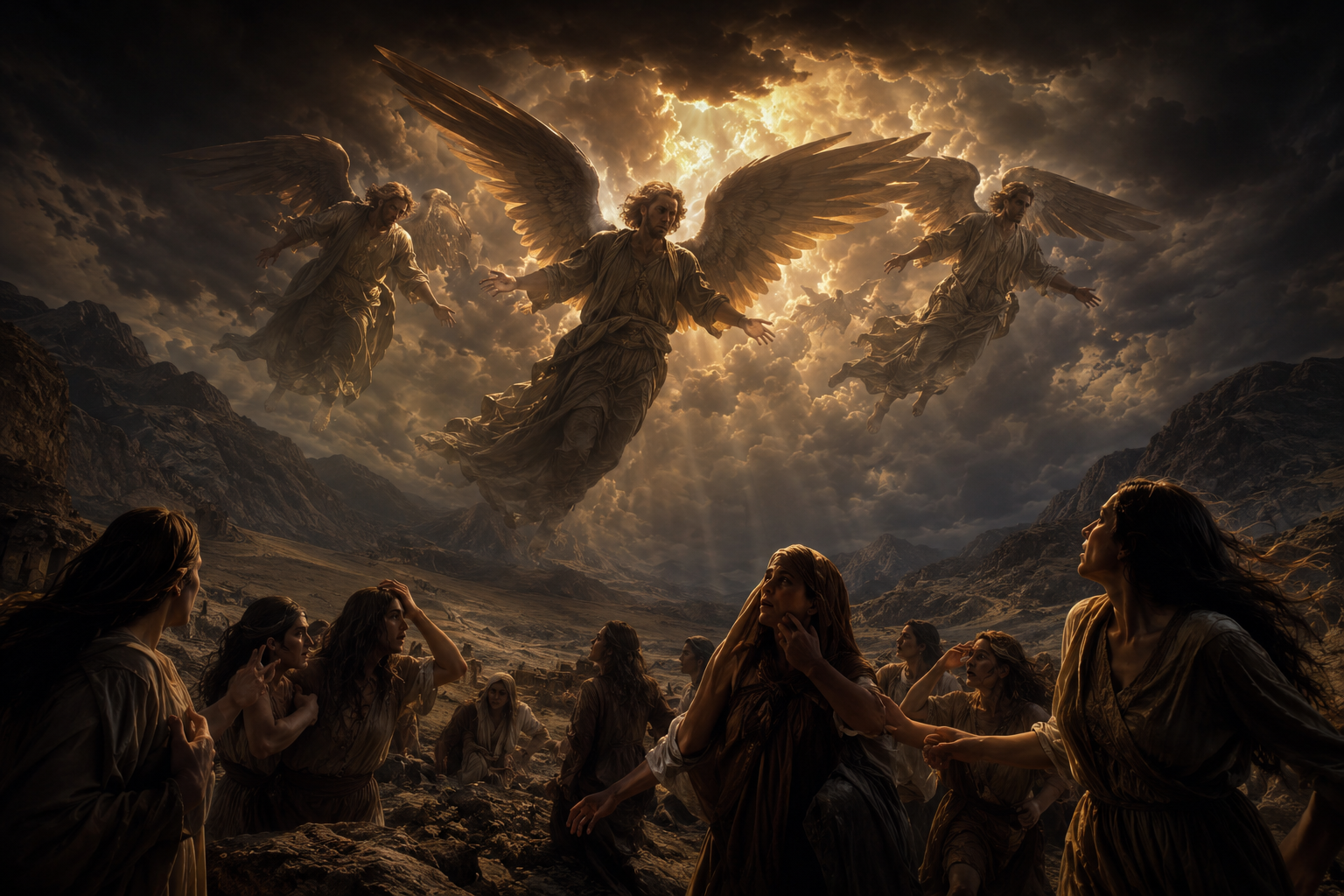
At an archaeological dig in Lebanon, researchers reported human skeletons over three metres tall. The story spread fast and reignited the debate about giants in the ancient world. That particular find turned out to be a hoax, but it touched something that has fascinated humanity for millennia: the possibility that extraordinary beings once walked the earth.
The biblical account in Genesis 6 holds one of the most enigmatic and debated passages in Scripture. There we find mention of the “sons of God”, the Nephilim, and “the mighty men who were of old”. Behind those few verses lies a narrative that shaped not only Jewish and Christian theology but entire bodies of apocalyptic literature.
What really happened in the days before the flood? Who were those mysterious “sons of God”? And how does the Book of Enoch — though not canonical — help us understand these questions? What follows is an investigation that crosses millennia of interpretation and takes us to the roots of one of the most intriguing narratives in human history.
The original account: what Genesis 6 actually says
Before diving into the complex interpretations, we need to examine the source text with the precision of a detective going through evidence. Genesis 6:1-4 gives the account in just four verses, but every word carries historical and theological weight.
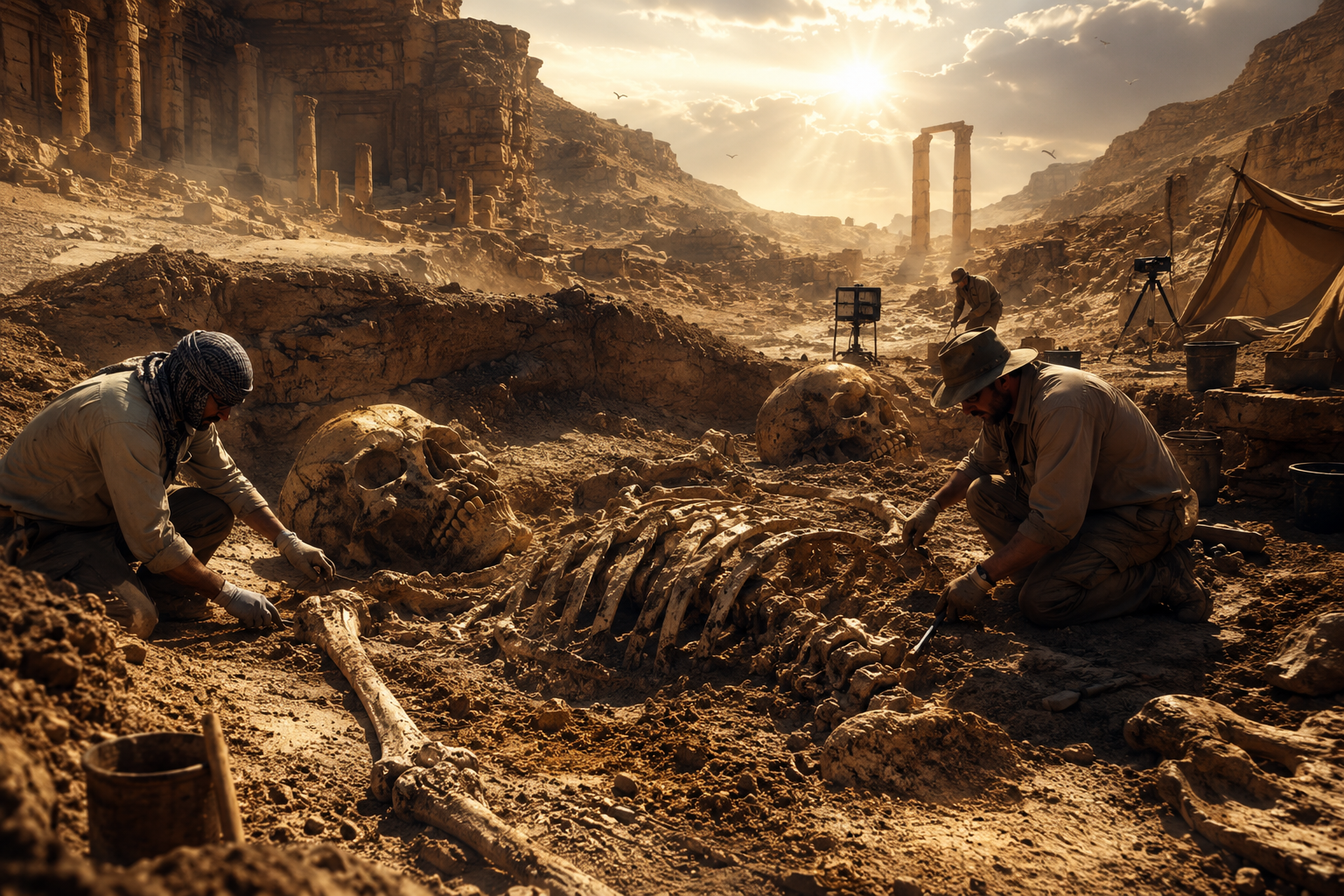
“When men began to multiply on the surface of the ground, and daughters were born to them, God’s sons saw that men’s daughters were beautiful, and they took any that they wanted for themselves as wives.”
The Hebrew text uses the expression “benê hā-ʾĕlōhîm” for “sons of God” — a construction that appears in other biblical contexts and always provokes debate among scholars. The word “took” (lāqaḥ) suggests not only marriage but possession or conquest.
Verse 4 then introduces the figures that would spark centuries of speculation:
“The Nephilim were in the earth in those days, and also after that, when God’s sons came in to men’s daughters and had children with them. Those were the mighty men who were of old, men of renown.”
The word translated “giants” is “nephilim” in Hebrew — from the root “nafal”, meaning “to fall”. But who were these beings? And why would their existence justify the global destruction that followed?
Three main interpretations: the battle of ideas
Across history, three main interpretations emerged to explain the identity of the “sons of God”. Each carries deep theological implications and was defended by intellectual giants of its era.
The Sethite interpretation: descendants of Seth
This reading, popularised by Augustine and adopted by many later theologians, holds that the “sons of God” were godly descendants of Seth, Adam’s third son. On this view, those righteous men were corrupted by marrying descendants of Cain, the cursed line.
Its defenders point out that “sons of God” could refer to those who “called on the name of the Lord”, as mentioned in Genesis 4:26. The corruption would have come when that holy line mixed with the profane one.
But this interpretation faces questions: why would such a mixing produce giants? And how do we explain the apocalyptic language surrounding the event?
The royal interpretation: descendants of kings
A second line identifies the “sons of God” as descendants of rulers or kings, based on the occasional use of the term “god” (elohim) for human authorities in Scripture. On this view, powerful tyrants built harems, taking women by force and fathering a line of formidable warriors.
This theory explains the political and social side of pre-flood corruption, but it leaves open questions about the supernatural nature of the Nephilim and the connection with angelic narratives elsewhere in Scripture.
The angelic interpretation: fallen angels
The third interpretation — and perhaps the most controversial — identifies the “sons of God” as angels who abandoned their heavenly state to join with human women. This view echoes in several New Testament passages and was widely accepted in Second Temple Judaism.
The apostle Peter seems to refer to this event when he writes about angels who sinned and were cast into “Tartarus” (2 Peter 2:4). Jude likewise mentions “angels who didn’t keep their first domain” (Jude 6).
But how does this interpretation connect with extra-biblical Jewish literature? And what does it reveal about the nature of cosmic rebellion?
The Book of Enoch: expanding the narrative
To fully grasp the angelic interpretation, we have to examine a source that, while not canonical, shaped early Jewish and Christian thought deeply: the Book of Enoch (1 Enoch).
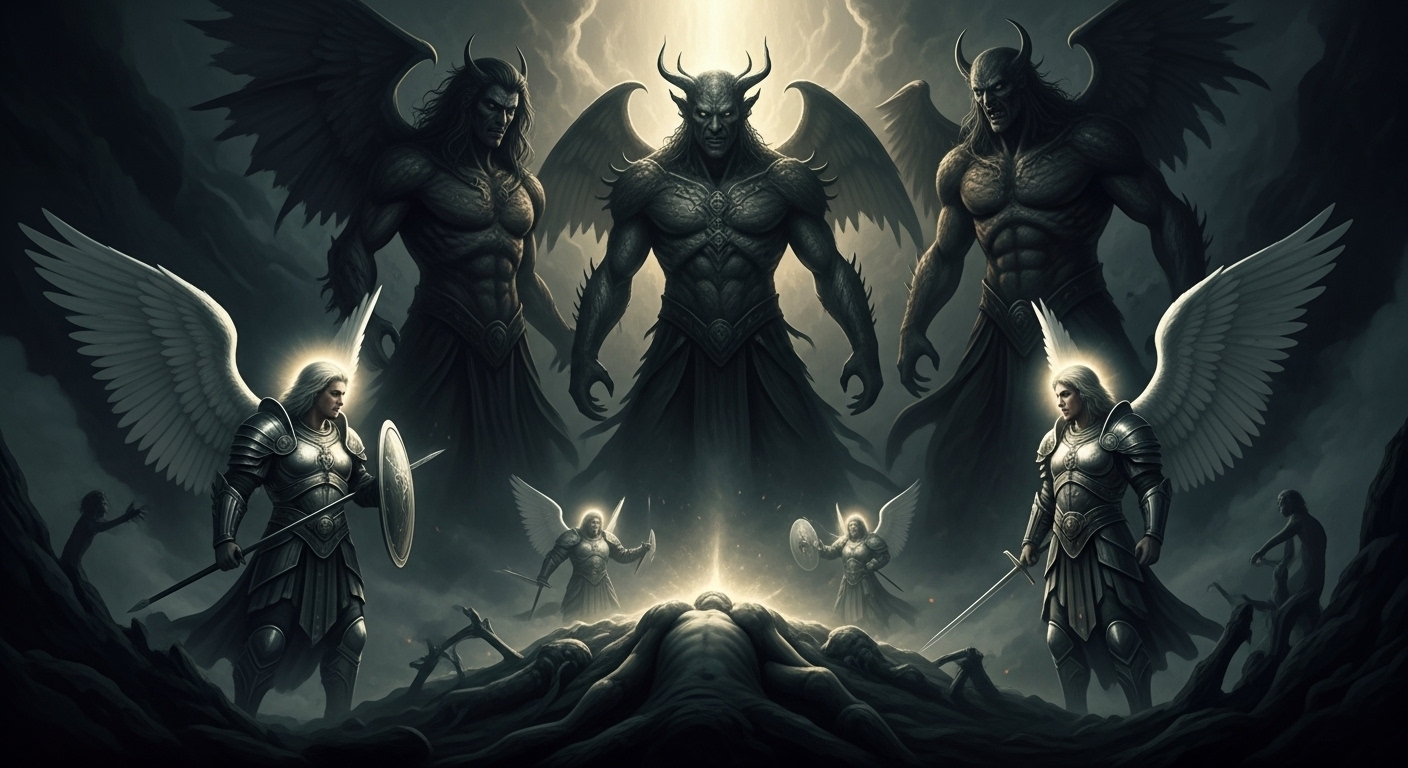
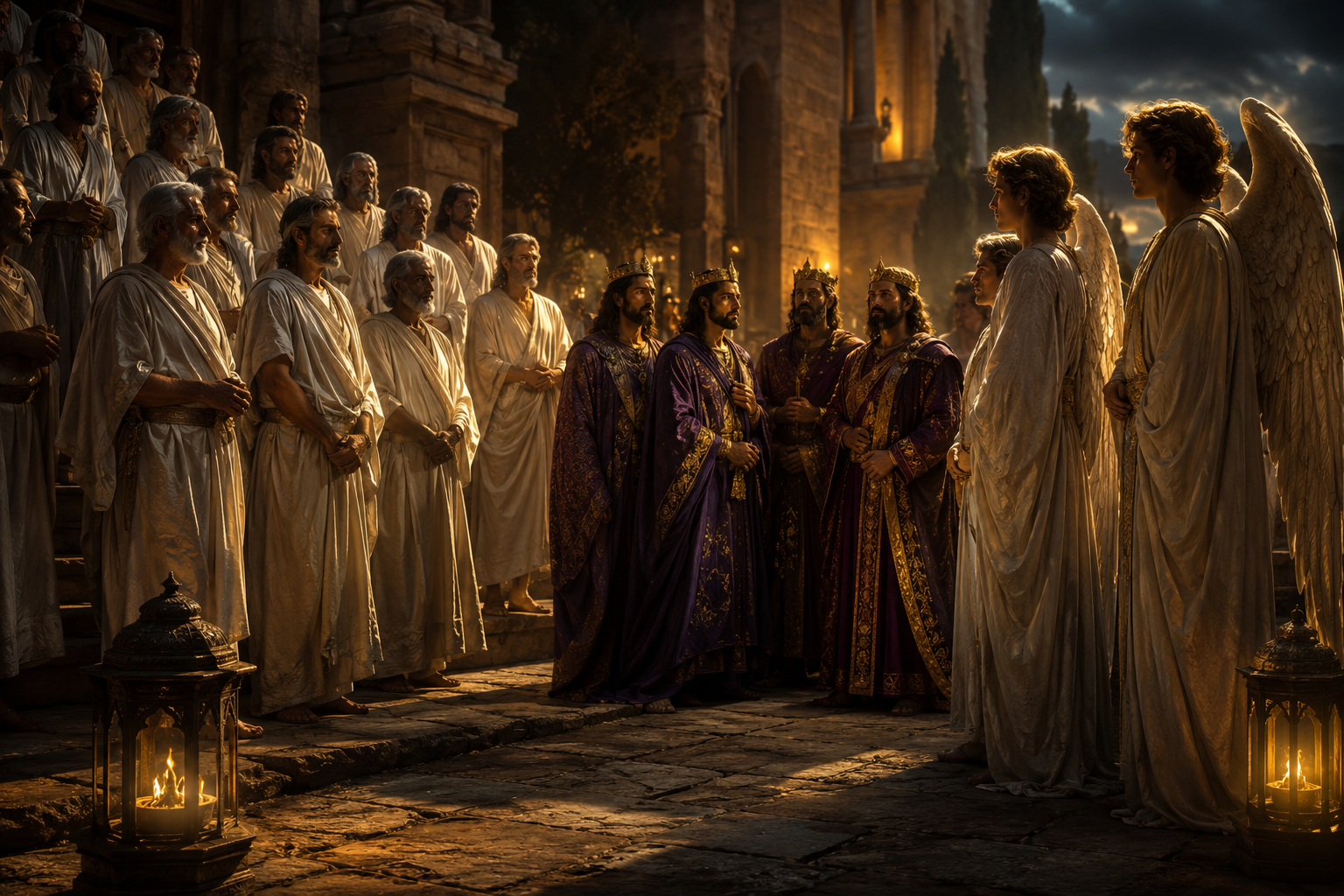
According to Enoch’s account, two hundred angels known as the “Watchers” (Grigori) descended on Mount Hermon under the leadership of Semyaza. These heavenly beings made a pact among themselves, knowing their act amounted to rebellion against God.
The text describes how those Watchers not only joined with human women but also taught humanity forbidden knowledge: metalworking, cosmetics, astrology, magic and warfare. Their hybrid children — the Nephilim — became cannibal giants who terrorised the earth.
Although most Christian traditions do not consider the Book of Enoch inspired, elements of its narrative echo in canonical Scripture. Jude himself quotes a prophecy of Enoch directly (Jude 14-15), suggesting familiarity with this tradition.
But how far can we use extra-biblical sources to interpret the sacred text? And what historical weight do those ancient records carry?
Archaeological and historical evidence: what the ground reveals
The search for physical evidence of the Nephilim has fascinated archaeologists and researchers for generations. We have no conclusive finds of giant skeletons, but there are intriguing clues in ancient civilisations.
Megaliths around the world — from Stonehenge to the stones of Baalbek — show building capabilities that stretch our understanding of ancient technology. Mesopotamian texts such as the Sumerian King List mention rulers with impossibly long reigns, echoing biblical themes.
More significantly, narratives of giants and hybrid beings appear in completely isolated cultures: the Greek Titans, the Hebrew Nephilim, the biblical Gibborim, and similar legends among Native American and Asian peoples. That universality suggests a collective memory of extraordinary events.
Ugaritic texts found at Ras Shamra mention the “Rephaim” — ancestral giants regarded as semi-divine. The Old Testament itself preserves memories of giant populations: the Anakim, the Rephaim, and Goliath of Gath.
This converging evidence paints a fascinating picture, but it raises a crucial question: how do we hold historical findings together with responsible biblical interpretation?
Theological implications: beyond historical curiosity
The debate about the Watchers and the Nephilim goes beyond archaeological curiosity and touches fundamental questions about the nature of evil, free will and divine sovereignty. If angels really rebelled in this way, it reveals cosmic dimensions to spiritual conflict.
The angelic interpretation suggests that pre-flood corruption was not merely moral but genetic and ontological. The Nephilim would represent an attempt to contaminate the human line, potentially preventing the fulfilment of the messianic promise of Genesis 3:15.
This perspective offers an explanation for the severity of the divine judgement. The flood was not only a response to human wickedness, but an act of preserving humanity as God created it. Noah represented a “perfect” genetic line (tamim in Hebrew), uncontaminated by angelic hybridisation.
Paul seems to echo those concerns when he instructs the Corinthian women about covering their heads “because of the angels” (1 Corinthians 11:10) — a reference possibly connected to the events of Genesis 6.
But how do these ancient interpretations connect with our modern understanding of faith? And what practical lessons come out of this historical investigation?
The mystery remains: lessons for today
After millennia of debate, the events of Genesis 6 keep their mystery. Each interpretation — Sethite, royal or angelic — offers valuable insight into the human condition and the divine plan. Perhaps the truth holds elements of all three.
What stays clear is the seriousness with which Scripture treats the corruption that preceded the flood. Whether through the mixing of lines, the abuse of power or angelic rebellion, something extraordinary happened that demanded radical divine intervention.
For Christians today, these narratives are a powerful reminder that we live in a universe where supernatural forces operate. Spiritual conflict is not a metaphor but a cosmic reality that shows up in tangible historical dimensions.
The mention of the Nephilim “and also after that” (Genesis 6:4) suggests that elements of that corruption survived the flood, echoing in Israel’s battles against the giants of Canaan. The story did not end; it keeps unfolding to this day.
Whatever our particular interpretation of the Watchers and the Nephilim, one truth emerges clearly: God remains sovereign over every force that opposes his purpose. The waters of the flood that destroyed the ancient corruption are the same waters that lifted the ark of salvation. In apparent chaos, divine mercy prevails.
This investigation reminds us that Scripture holds depths beyond our full understanding. As detectives of divine truth, we should embrace both intellectual humility and investigative courage, always letting the sacred text keep final authority over our speculation.
The Great Story — 7 free devotionals
If this subject touched you, I put together a free devotional with the most important passages to deepen your Bible reading.